
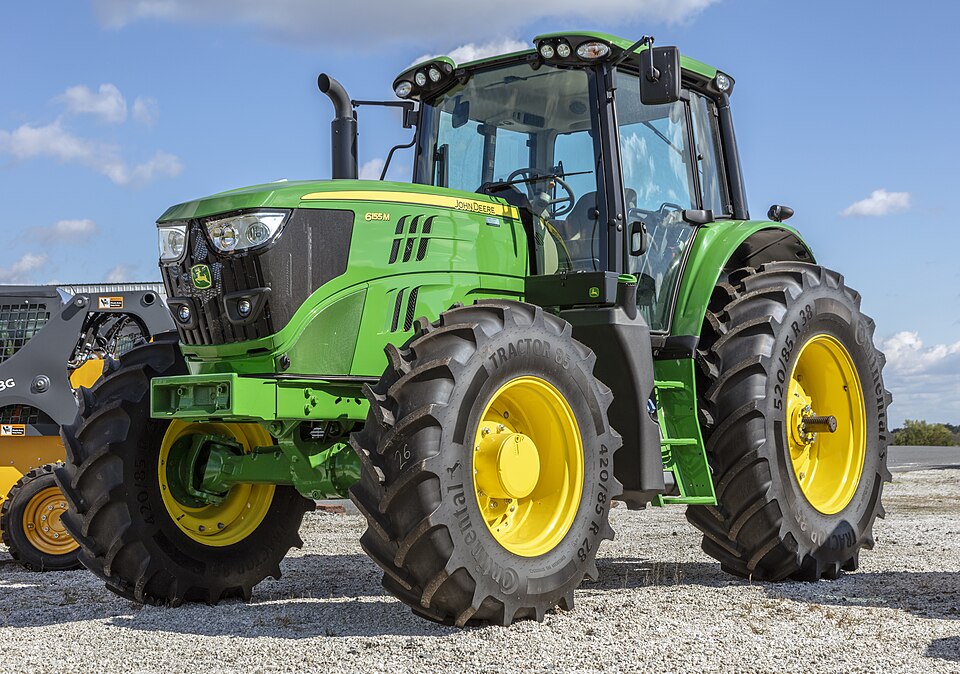
A recent episode of the podcast 99% Invisible discussed the concept of “enshittification.” It’s a term coined by writer Cory Doctorow to describe the lifecycle of many online platforms and modern technology. Basically, you know how it seems like your iPhone stops working every couple years and you’re forced to buy a new one? Well a lot of that has to do with the companies behind the technology, they lock you into a system and make it harder and harder for you to do any repairs yourself, leading to a new purchase from that same company. Instead of long lasting and repairable, we have cheap and replaceable, and the argument here is that’s by design.
This episode also talked a lot about this concept as it relates to large physical items like John Deere tractors. Due to complicated computers and manufacturer locks, many farmers couldn’t even repair their own vehicles. A farmer used to be able to go down to the store, get a new part, either from an official John Deere store or a small independent shop, and get his tractor back up and running that same day. Now, they often have to find authorized technicians that have the ability to get past software locks and get into the computer system, making repairs more costly and time consuming. Recently, there have been legislative fights to push for “The Right to Repair”, limiting companies’ ability to lock out their customers from fixing their own equipment.
The episode was about technology and tractors, but the parallels to our cities was too obvious to ignore.
Cities and software are worlds apart, but it seems that we’ve fallen into those same tendencies when it comes to how we build and design the places we live and work. We’ve become very good at optimizing our built environment for the specific needs of today without thinking about how it will adapt to tomorrow’s, or even if it will be allowed to.
One of the best things about older neighborhoods in Detroit is how difficult it is to tell what many of the buildings were originally built for. A storefront might have been a butcher shop, then a hardware store, then a bar, and today it’s a coffee shop. The warehouses of 100 years ago can be anything you can dream up, while mansions become apartments, condos, or restaurants. These older buildings have outlived their original purpose because they weren’t designed around one very specific use. They were built to be resilient, and that resiliency has kept them from suffering death by wrecking ball.
Compare that to much of what we’ve built over the last fifty odd years. Think about a big box store, a suburban office park, or a drive-thru restaurant. These buildings are incredibly efficient for their current use, however, they’re also surprisingly difficult to adapt when that use disappears.
How many malls have been torn down in the last few decades with the rise of online shopping? Now developers will spend millions, maybe even billions, redeveloping these huge plots of parking lots and rubble. It seems like every few years an office park or strip mall is being targeted for demolition, not even 50 years after it was the shiny new kid on the block. And what else can a drive-thru McDonald’s be besides a drive-thru McDonald’s? Maybe a Burger King?
It’s not that these buildings are falling apart, it’s that they just aren’t useful anymore. Think of the all the small corner buildings in Southwest or Jefferson Chalmers. They probably didn’t receive a ground breaking or ribbon cutting (they also probably didn’t receive millions in tax breaks), but they’ve outlived malls, football stadiums, and grand corporate headquarters.
During the episode, the farmer was talking about digital blocks on the tractor that prevented them from fixing them even if they had all the parts, this is kind of like the blocks local governments and zoning throw up.
Traditional neighborhoods evolved because they were allowed to evolve. Homes became duplexes. Corner stores popped up when the neighborhood demanded them. Buildings expanded as demand grew and uses changed gradually over decades. This is like the tractor that can be repaired with whatever the farmer has lying around, just anything to keep it moving.
And then comes zoning, where even if a building could function as something else, rules and regulations make it so expensive and difficult, many people don’t even try. Modern zoning often assumes that every parcel has one correct use that should remain unchanged indefinitely. And any proposed change deserves the strictest of scrutiny, despite changes in the people, the economy, and the lifestyles of residents.
A daycare can’t be a restaurant and the house on the corner can’t open a coffee shop on the first floor without going through various rezoning meetings, applying for variances, doing extensive rehab, all while fighting the few neighbors who don’t have the same vision you do. When we make adaptation so difficult, replacement becomes the only option.
Neighborhood staples like a grocery store or hardware store need to be built with expansive parking, so they are built like single purpose buildings and are so hard to repurpose, they end up being disposed of when the original use isn’t viable. That not only leaves a vacant building, but a void in a neighborhood that brings down everything around it.
One of the ideas that comes up repeatedly in Strong Towns is the importance of incremental change and resiliency. Some of the greatest parts of our cities were built by everyday people making small changes and adapting to their environment. A butcher shop here, a boarding house there. We often talk of local people taking risks and bettering their city, but then throw up roadblocks in nearly every direction. Now we rely on mega-developers to tear down that old “outlived” building and construct a completely new building for a new use, only for the process to repeat in a few decades.
It’s ironic, because for decades we’ve celebrated efficiency as the highest goal in planning and development. We optimized buildings, streets, parking requirements, zoning, and financing around very specific assumptions about how people would live, work, and travel. But many of those assumptions will soon change, or already have. Retail has changed, office work has changed, transportation is changing, housing preferences continue to change. We need a city that can change along with it.
With the tractor, some of the blame is on John Deere, some is on the government for not stepping in and doing something about it. With our cities, we can blame the developers and land owners for not building a certain way, but there’s plenty of blame to place at the feet of our state government, city councils, mayors, zoning boards, and other various commissions. These officials and bodies can act kind of like the computers on the tractor, blocking people from making repairs and improvements even if they are willing and have the knowledge. Full time developers, let alone neighbors trying to make simple improvements, struggle to navigate the rules and regulations that come with something as simple as turning a bike shop into a deli. We’ve created such elaborate rules about zoning and usage, neighborhoods have struggled to adapt to the changing world around them.
There’s been a lot of positive progress over the past few years of making sure things like small business licensing is simple and easy to navigate, but we need to tackle this same problem for development to make sure
Companies that design phones will come and go, but a city needs to live forever. You can’t simply throw it away and buy a new one, we need to be able to repair, redevelop and reuse it.
Leave a Reply