
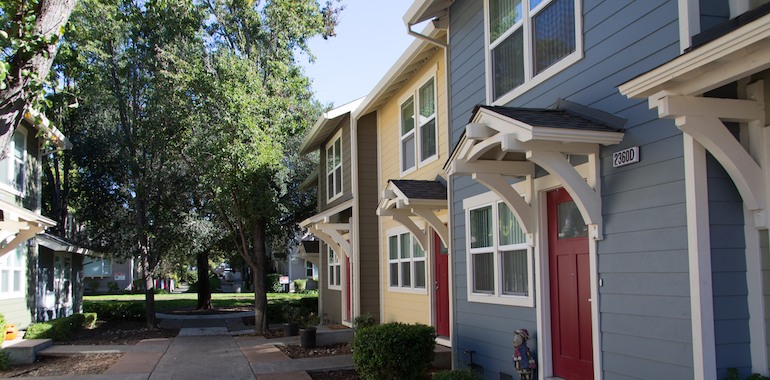
Across Michigan, housing costs have been rising and many communities are facing a shortage of homes. While housing markets vary from place to place, one factor that consistently shapes how much housing can be built is zoning.
In Michigan, the authority to regulate land use comes from the state through the Michigan Zoning Enabling Act, but the specific zoning rules themselves are typically written and enforced by local governments. Cities, villages, and townships adopt zoning ordinances that determine what types of housing are allowed in a neighborhood, minimum lot sizes for new homes, parking requirements and whether additional units can be built on an existing property.
Because zoning decisions are made locally, these rules can vary widely from one community to another, which determines how easy or difficult it is to build new housing.
In Lansing, policymakers are currently debating two different approaches to addressing Michigan’s housing shortage:
- Statewide zoning reforms that would limit certain local restrictions
- A state incentive program encouraging communities to adopt housing-friendly policies
The first approach is often referred to, especially by critics, as “state pre-emption”: the state would be making rules that have historically gone to local municipalities. They make it illegal to have very restrictive zoning rules. The latter preserves “local control”, allowing municipalities to opt in to a program that provides funding for their city should they adopt less restrictive zoning rules. It’s important to note that both approaches aim to make it easier to build more homes by lessening zoning restrictions, but they rely on different policy tools – a “carrot” (incentives) or a “stick” (making it illegal to do otherwise).
Statewide Zoning Reform Proposal
A group of bills introduced in the Michigan House would establish statewide standards limiting certain zoning restrictions. This bill would put some guardrails on what maximum or minimal rules would be allowed in a given municipality by amending the Michigan Zoning Enabling Act, which governs how municipalities regulate land use.
Key bills include:
- Michigan House Bill 5529 and 5530 – Limits minimum lot sizes for housing in areas served by water and sewer to 1500 maximum (this requirement can be as high as 12000 sq ft in some municipalities)
- Michigan House Bill 5581 – Limits minimum house size requirements to around 500 square feet, to allow for more starter homes
- Michigan House Bill 5583 – Limits local rules about setbacks requirements greater than 25 feet
- Michigan House Bill 5582 – Restricts how many parking spaces local governments can require, a maximum of one parking space per dwelling unit
- Michigan House Bill 5584 – Requires duplexes to be allowed in areas zoned for single-family homes.
- Michigan House Bill 5585 – Expands the ability to build accessory dwelling units (ADUs).
- Michigan House Bill 5531 – Limits the amount of time local municipalities can review a site to 60 days
- Michigan House Bill 5532 – Raises the threshold for protest petitions by neighbors of a project from 20% to 60%, while also expanding the area of eligible petitioners from 100 feet to 300 feet
These changes are intended to allow for smaller homes, closer together, that can be more affordable for young people while also allowing neighborhoods to become more walkable and more productive at generating taxes for the city.
To learn more about how these policies can benefit a community, we recommend reading our explainer on the similar “Let’s Build More Housing, Detroit” ordinance at the local level, or our zoning op-ed in Bridge Detroit from last year.
By setting these limits at the state level, proponents argue that we can tackle housing affordability for the whole state instead of relying on piecemeal improvements that can often take years via zoning reforms and master plan updates within municipalities. These efforts can also be delayed by public opposition from local NIMBYs (“Not in My Backyard”) who don’t want more density in their areas. Hence the bills tackle not just the zoning regulations municipalities can set, but also the lengthy approval process and petition abilities of the community.
These bills have bipartisan support in the Legislature and are championed by Abundant Housing Michigan. They also have support from unusual allies such as the Michigan Sierra Club and the Mackinac Center for Public Policy.
Opposition comes primarily from the Michigan Municipal League and local municipalities, on the issue of local control. Again, this opposition comes not from the actual policies in the bills, but simply due to the fact that Lansing is dictating them for the rest of the state. Recently, the Detroit City Planning Commission unanimously voiced their opposition to this bill package, despite recommending the “Let’s Build More Housing, Detroit” ordinance, which includes many of these same policies, to the city council for passage last year.
The MI Home Program Proposal
A second proposal takes a different approach. Rather than requiring zoning changes statewide, it would create an incentive program encouraging communities to adopt housing-friendly policies.
Often referred to as the MI Home Program, the proposal has been supported by the Michigan Municipal League.
Under this program, communities could receive state funding for housing development and infrastructure if they adopt zoning changes that make it easier to build housing.
Here’s more specific language from MML’s draft of the proposal on their website:
“Local units of government that proactively make or have made 50 percent or more of the following recommended actions and have been approved by the State, unlock the ability for a qualified developer to utilize the MI Home Grant and the MI Home Fund within those communities.
- Reduce residential parking requirements to 1 space per dwelling or less
- Allow accessory dwelling units (ADU) for long-term housing as permitted use
- Allow duplex as permitted use in residential
- Adopt pre-approved plans
- Allow higher density near transit and employment centers
- Allow single room occupancy for non-related individuals for long-term housing
- Reduce allowable dwelling unit size
- Allow multi use dwellings and mixed use where commercial is allowed
- Reduce governing body approvals by expanding and expediting administrative review approvals
- Reduce minimum lot size requirements
- Provide height or density bonuses
- Adopt universal design standards
- Allow modular as a permitted use in residential
- Complete the Redevelopment Ready Communities program”
Many of these points overlap with the statewide zoning reform package in their goals to reduce requirements to build smaller units with less parking and more density. The program relies on a $160 million investment annually from the state. Individual developers in communities that opt into the program will get a grant capped at $100,000 per unit for new development and $50,000 per unit for rehab projects.
One challenge for this approach is that adding more expenses to the budget is a tough ask as Michigan lawmakers are dealing with about one billion dollars less than in previous years. It also doesn’t solve the issue of the fact that municipalities are doing this work piecemeal. While funding from higher-level governments can spur municipal governments to start work on zoning reform, like the PRO Housing grant Detroit received from the Biden administration, there can still be delays with local opposition and long timelines. A full zoning reform process can and often does take years. For example, the “Zone Detroit” project began in 2018 and, as of writing this article in 2026, is still not complete.
Does state-level policy work?
States and cities across the U.S.A. have increasingly experimented with zoning reform as a way to address housing shortages.
In 2019, Oregon House Bill 2001 effectively ended single-family-only zoning in many cities by allowing duplexes, triplexes, and fourplexes on residential lots. Early results suggest the reform has begun increasing the share of “middle housing” being built. In many Oregon cities, permits for duplexes, triplexes, and fourplexes rose from about 8% of new housing permits to roughly 11% after the law took effect. Some smaller cities saw much larger changes. In the city of Keizer, for example, middle housing increased from 9% of permits to 42% after legalization.
Both of the proposed solutions aim to increase missing middle housing like the Oregon bill has, with the goal to improve housing affordability by increasing supply.
Which housing solution is best for Detroit?
There is clear consensus on the need for changes in zoning in order for housing to become more affordable. The state-level zoning reform bill package, the proposed MI Home incentive program, and the proposed “Let’s Build More Housing, Detroit” ordinance all have policies in common. They allow for more “missing middle” housing in residential areas, reduce burdensome parking minimums, allow for smaller homes on smaller lots, and allow ADUs to be built in neighborhoods. As an organization, Strong Towns Detroit has supported zoning reform in the City of Detroit since day one. All of these proposals get us closer to the goal of making it easier and more affordable to build housing.
In a scenario where either of these state level proposals become law, there is still much work to be done at the local level. Parking minimums should continue to be scrutinized and potentially done away with completely (the Let’s Build More Housing, Detroit proposal wins slightly on this, with 0.75 parking spaces required per unit citywide versus 1 parking space per unit in the state zoning bill), and the city should continue to look at land restrictions that limit the ease of bringing new housing online. Additionally, the City should continue to engage with other institutions like DTE and DWSD, to make connecting to utilities easier, and Wayne County and MDOT, to right size roads owned by the County or State. One session of bills at the state level is not going to solve the housing and affordability crisis in the city, though these bills move us in the right direction.
As an organization our goal is to build a stronger Detroit, whether that happens at the state level or the local level. We support bills that move us towards that vision.
If you’d like to contact your state-level legislators about either housing bill package, please find their contact information here (you can find out whether your legislator is already cosponsoring individual bills by clicking on the links above). We strongly recommend reaching out to your city council members (including the at-large members!) in support of the “Let’s Build More Housing, Detroit” ordinance. You can find their contact information here.
Leave a Reply